
Chances are, you’ve heard of Sichuan food. It’s one of China’s best known regional cuisines (in fact, the most popular regional cuisine in China), and dishes like mapo tofu, hotpot, and Kung Pao chicken have traveled far beyond Sichuan.
But ask what makes Sichuan food Sichuan, and the answer often comes down to two things: spicy and numbing.
That’s málà 麻辣, the combination of chili heat and the buzzing tingle of Sichuan pepper. It is one of Sichuan cuisine’s most famous flavors, and yes, we built an entire company around being obsessed with the numbing part.
 Image: Sichuan hotpot, a classic example of málà.
But málà is only one flavor in a much bigger system.
Acclaimed food writer and Sichuan cuisine expert Fuchsia Dunlop describes 23 classic flavor combinations in The Food of Sichuan, from yúxiāng and red oil to sesame paste and tangerine peel.
The exact count can vary, but the bigger surprise is how many are not built around chili or Sichuan pepper at all.
A Hundred Dishes, A Hundred Flavors
There is a famous Sichuan saying:
Yī cài yī gé, bǎi cài bǎi wèi.
一菜一格,百菜百味.
“One dish, one character. A hundred dishes, a hundred flavors.”
That gets much closer to the heart of Sichuan cooking than simply calling it spicy.
Dunlop compares learning Sichuan cooking to learning the grammar of a language. Cooks learn how sweetness, sourness, salt, fragrance, heat, numbness and umami work together, then recombine them across different dishes.
 Image: The Sichuan pantry has its own flavor vocabulary: chilis, Sichuan pepper, aromatics, spices and sauces, recombined into countless different dishes.
And the flavor profiles are not rigid boxes. Kung Pao chicken, for example, combines scorched chili flavor with a sweet-sour “lychee flavor” that usually contains no lychee.
That flexibility is exactly what makes the system so interesting.
We picked six profiles to show the range: four among the flavors most famously associated with Sichuan, plus two that move into sweet-sour and smoky territory.
1. Málà 麻辣: The Famous One
Málà combines má 麻, the tingling sensation from Sichuan pepper, with là 辣, chili heat.
But good málà is not simply about making food painfully spicy. Sichuan cooks even have a phrase for the ideal: má ér bù mù, là ér bù zào 麻而不木,辣而不燥 — “numbing without deadening, hot without being harsh.” The heat and tingle should reveal flavor, not overwhelm it.
Sichuan pepper brings much more than numbness. Red Sichuan pepper tends to be warmer and rounder, with citrus and floral notes, while green Sichuan pepper is brighter, fresher and more intensely citrusy.
 Image: Red and green Sichuan pepper, two expressions of the ingredient behind málà’s signature tingle.
Chilis bring heat, but also fragrance and fruitiness. Add chili oil, fermented chili bean paste and other seasonings and you get something much more layered than simply “hot.”
There is also a historical twist. Chilis came to China from the Americas, while Sichuan pepper had already been used there for much longer. Sichuan cooks brought the two together into a combination that now feels inseparable from the cuisine.
2. Yúxiāng 鱼香: Fish Fragrant, But No Fish
Yúxiāng literally means “fish fragrant,” yet order yúxiāng ròusī 鱼香肉丝, shredded pork in fish fragrant sauce, or yúxiāng qiézi 鱼香茄子, fish fragrant eggplant, and there is usually no fish in the dish.
 Image: Yúxiāng qiézi 鱼香茄子, a Sichuan classic that traveled far beyond Sichuan and became a restaurant staple across China.
The flavor is built around pickled chili, ginger, garlic and scallion, with sugar and vinegar providing its sweet-and-sour balance. It is savory, aromatic and gently spicy, with heat only one part of the picture.
The name is associated with seasonings traditionally used with fish, but the combination eventually moved into other dishes.
The fish simply went away, but the flavor stayed.
3. Guàiwèi 怪味: Strange Flavor
Guàiwèi literally means “strange flavor.”
Strange” sounds like an insult, but here it is almost a compliment.
It brings together soy sauce, vinegar, sugar, sesame paste, chili oil, Sichuan pepper and sesame oil. Salty, sweet, sour, spicy, numbing, nutty and fragrant can all show up in one bite.
It sounds overwhelming, but that is the point: no single taste should dominate.
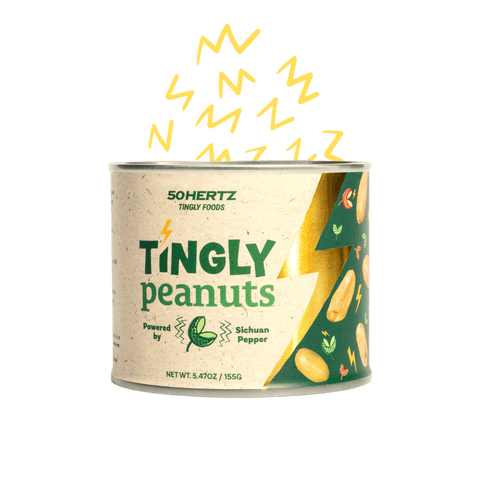
 Image: Our Tingly Cashews take guàiwèi in a less traditional direction, layering sweet, savory, spicy, nutty and numbing flavors in one bite.
A classic example is guàiwèi bang bang chicken, where all those tastes are balanced in one dish.
At 50Hertz, we took the same idea somewhere slightly less traditional with Tingly Cashews!
4. Jiācháng Wèi 家常味: Home-Style Flavor
Jiācháng wèi means “home-style flavor.” Unlike málà, it is not defined by chili and Sichuan pepper.
Instead, it is salty, deeply savory and usually a little hot, often built around Sichuan chili bean paste, fermented black beans, soy sauce and salt.
Think huíguō ròu 回锅肉, twice-cooked pork, or jiācháng dòufu 家常豆腐, home-style tofu.
 Image: Huíguō ròu 回锅肉, twice-cooked pork, captures the heart of jiācháng flavor: rich, savory Sichuan home cooking where spice supports the dish instead of taking over.
 Image: A typical home cooked meal looks like this in Sichuan.
If málà is about heat and numbness, jiācháng is about depth and savoriness. It may be spicy, but the spice supports the dish rather than defining it.
5. Lìzhī Wèi 荔枝味: Lychee Flavor, No Lychee Required
Lìzhī wèi means “lychee flavor.”
The irony? Usually, there is no lychee in it.
Instead, it describes a sweet-and-sour balance that leans slightly more sour than sweet. Tángcù 糖醋, the sweeter style of sweet-and-sour familiar from many Chinese-American menus, flips that balance.
You may already know lìzhī without knowing its name. Gōngbǎo jīdīng 宫保鸡丁, better known in the United States as Kung Pao chicken, pairs that sweet-sour balance with the fragrance of scorched chilis.
 Image: Gōngbǎo jīdīng 宫保鸡丁, better known as Kung Pao chicken, is a classic example of lìzhī wèi, the Sichuan sweet-and-sour flavor that leans slightly more sour than sweet.
That helps explain why good Kung Pao chicken should not simply taste sweet. The sugar plays against vinegar, salt and toasted chili.
Sweetness is part of it, but not the whole point.
6. Yānxiāng Wèi 烟香味: Smoked Flavor
Yānxiāng wèi means “smoked flavor,” a reminder of how far Sichuan cooking stretches beyond red chilis and Sichuan pepper.
Here, smoke is not just a cooking method. It is treated as a flavor in its own right, and even the material producing it matters.

Image: Zhāngchá yā 樟茶鸭, Sichuan tea-smoked duck, shows how smoke itself can become a defining Sichuan flavor.
Meats and poultry may be smoked over tea, camphor leaves, cypress branches, rice straw or even peanut husks, each contributing its own aroma.
The result can be fragrant, savory and deeply smoky, with no need for málà to make it recognizably Sichuan.
Málà Is Just the Beginning
None of this is meant to downplay málà. We love málà. Obviously.
But Sichuan cooking is much bigger than chili heat and numbness. It can be fish-fragrant, deeply savory, sweet and sour, smoky, or somehow all of those things at once. The point is not one defining flavor, but the ability to build completely different flavors from the same pantry and techniques.
Which brings us back to that old saying:
Yī cài yī gé, bǎi cài bǎi wèi.
一菜一格,百菜百味.
“One dish, one character. A hundred dishes, a hundred flavors.”
Málà may be the flavor that introduced much of the world to Sichuan food. It is just one word in a much bigger language of flavor.




Commentaires (0)
Il n'y a pas de commentaires pour cet article. Soyez le premier à laisser un message !