

At 50Hertz, we spend an unreasonable amount of time thinking about one question:
Why do certain flavors feel inevitable together — even when they come from opposite sides of the globe?
Mexican cooking draws on fiery chilies, corn masa, citrus, herbs, smoke, and slow-rendered meats shaped by centuries of regional cooking traditions. Tex-Mex, rooted at the US-Mexico border, shares some of that DNA — focusing on grilled beef, cumin, chili powder, melted queso, flour tortillas, and open fire.
Sichuan cuisine brings its own signature language: chile heat layered into fragrant oils, fermented sauces, toasted spices, and the unmistakable citrus-floral tingle of huājiāo, the citrus berry that creates its famous numbing sensation.
On paper, these cuisines seem distant. In practice, they orbit the same forces: fat carrying spice, acid cutting richness, smoke meeting heat, citrus lifting everything.
Put them on the same plate and the overlap becomes obvious.
The lemony aroma of Sichuan pepper sharpens grilled meat. The tingle stretches chile heat rather than competing with it. Oil links the flavors. Acid keeps things in balance.
What might look like “fusion” at first bite starts to read as something more subtle and structural — a shared way of building flavor and intensity.
Sichuan Cuisine: Two Chili Cultures, United Under One Confusing Name

Image: In Chinese, the two Chili peppers and Sichuan pepper are never confused: New World chili peppers are called làjiāo (辣椒), while Sichuan pepper is huājiāo (花椒) — it’s only in English that they get lumped together under “pepper.”
Both Mexican and Sichuan cuisines rely on dried chilies for aroma as much as heat — though they arrived there by very different routes.
Chili peppers are native to the Americas and only reached China in the sixteenth century through global trade. Over time, they were absorbed so completely into Sichuan cuisine that chilies have become inseparable from Sichuan heat.
China already had its own native spice long before chilies arrived: huājiāo, prized for its citrus aroma and numbing sensation — and confusingly labeled “pepper” in English centuries later, even though it isn’t related to black pepper or chilies at all.
Rather than replacing it, the New World peppers joined it, creating the now-famous pairing, málà (麻辣), of burn and buzz that defines Sichuan cooking today.

Image: Many people think Sichuan hot pot gets its heat from Sichuan pepper — but the real fire comes from dried chilies like Facing Heaven peppers (cháotiānjiāo 朝天椒), which often range around 30,000–50,000 Scoville. Huājiāo doesn’t burn. It creates that buzz.
That layering of imported chilies with native aromatics mirrors what has shaped Mexican cuisine for centuries: ingredients travel, adapt, and eventually feel essential rather than foreign.
Chinese Flavor Has Been Crossing Mexican Tables for Generations
There’s long been precedent for Chinese ingredients shaping Mexican cooking.
In the late nineteenth and early twentieth centuries, Chinese laborers moved south after U.S. exclusion laws, settling in northern Mexico and reshaping cities like Mexicali — where Chinese communities once rivaled the local population and left culinary marks that still endure. In everyday kitchens, flavors blended quietly: soy sauce met dried chilies, garlic-heavy stir-fries folded into local vegetables, new sauces slipped onto regional menus.
That exchange is happening again today.
In parts of Mexico City, recent waves of Chinese professionals have fueled a surge of regional restaurants, noodle shops, and Chinese markets, giving locals access to Sichuan dishes, hand-pulled noodles, fermented bean pastes, and specialty chilies. Migration creates appetite. Appetite builds markets. Markets reshape home cooking.
Seen that way, huājiāo on tortillas isn’t disruptive.
It feels like the latest turn in a long conversation.
Which is why Sichuan pepper on tacos never struck us as theoretical.
We’d heard chefs talk about it. Seen cooks experiment at markets and homes.
Eventually, we wanted to taste that logic ourselves.
Field Test: Tacos in Mexico City
On a recent trip to CDMX, our founder Yao stopped at Taquería Orinoco — a northern-style taquería in CDMX celebrated for its flour tortillas and meat-forward tacos.
Sitting in the cafeteria area with a tray of tacos in front of him, he did what so many people had urged us to try back home.
A drizzle of our red Sichuan pepper oil.


Images: From the line outside Taquería Orinoco to a tray of tacos inside: one drizzle of red Sichuan pepper oil in CDMX turned smoke, fat, chile, and citrus into something wider, longer, and buzzing at the edges.
The effect wasn’t novelty.
It was subtle. Structural.
The citrusy aroma cut through the richness of the meat right away. The tingle didn’t drown out the chilies — it made them hang around longer. The oil soaked into the meat, vegetables, and tortilla, carrying toasted spice into the spots where black pepper usually sits.
Instead of taking over the taco, huājiāo just widened everything.
It didn’t taste like something foreign dropped on top. It felt built into the flow of the bite — smoke, fat, acid, chile, citrus — stretched out and buzzing.
The logic was Mexican.
Why Sichuan Pepper Works in Mexican Cooking
Sichuan pepper doesn’t add more heat.
It changes how heat behaves.
Its active compounds create a buzzing, tingling sensation that amplifies aroma, sharpens contrast, and makes fat feel lighter. Instead of pushing dishes toward “hotter,” it stretches flavor sideways — longer, rounder, more dimensional.
In that sense, sprinkling huājiāo into Mexican food is almost a historical echo of the reverse.
In Sichuan, cooks folded New World chilies into their own native huājiāo (Sichuan pepper) centuries ago, layering burn onto buzz until the two became inseparable. The humid, cloudy climate of both regions made growing pungent crops easy, helping those flavors take root in everyday cooking.

Image: Mexican chilies (top two rows) — jalapeño, serrano, poblano, chipotle, ancho, and guajillo — sit above Sichuan-adopted New World varieties — Er Jing Tiao (èr jīng tiáo, 二荆条), Facing Heaven (cháo tiān jiāo, 朝天椒), and Xiao Mi La (xiǎo mǐ là, 小米辣) — now integral to everyday Sichuan cooking.
Mexican cooking already runs on chile heat. Adding Sichuan pepper simply completes the circuit — bringing the buzz to an existing heat.
That’s why it slips so easily into carne asada, carnitas, salsa macha, mole-adjacent sauces, even Mexican sweet corn dusted with chile and citrus.
Sichuan pepper works best when it isn’t isolated.
It works when it dissolves into systems Mexican cooks already understand — fat, acid, smoke, chile — and quietly rewires the experience.
A Tex-Mex Case Study: What Nathan Learned at the Markets
Across the border, we’ve watched a parallel experiment unfold in Tex-Mex formats — particularly through collaborator Nathan Alhades of Season Deez.
Instead of dropping huājiāo into unfamiliar dishes, he folded it into blends built around cumin, coriander, smoke, citrus aromatics, and fat — flavors Texans already trust.

Image: Szechuan Buzz, Drop #001 by Season Deez — Nathan Alhades’ Ma La blend for Texas heat and street-food swagger. Citrus-bright 50Hertz Sichuan pepper meets smoky chilies and a Tex-Mex backbone of cumin, coriander, anise, fennel, and cardamom. Shake it on fried chicken, grilled meats, fries, popcorn, or fruit — finish with lime and let the buzz ride.
What he noticed wasn’t fear of spice.
It was a surprise.
People expected burn.
They got vibration.
They blink.
They laugh.
They ask what just happened.
For Nathan at the Texas markets, sweet formats proved the fastest on-ramp: honey-based candy stirrers for coffee, fudge, cookies, and even candied fruit like tanghulu. Sugar softened the shock and made the tingle playful, opening the door to savory applications afterward.
We saw the same thing at 50Hertz — which is why we kept returning to chocolate, a Mesoamerican ingredient with centuries of history in spiced preparations.
Folding green Sichuan pepper into our Tingly Dark Chocolate and Tingly Brittle lets the buzz ride cacao’s richness, turning sweetness into a low-friction way to understand the sensation before carrying it back into savory cooking.

Image: Green Sichuan pepper hums inside single-origin cacao, turning sweetness into vibration instead of heat in our Herbaceous Green Tingly Dark Chocolate (50Hertz × Goodnow Farms).
Nathan’s takeaway was simple: this isn’t about heat.
It’s about timing, texture, and dimension. And we agree.
Once eaters understood the buzz, they started looking for it everywhere.
Mouthfeel, Not Fusion
Mexican food is textural at heart: soft tortillas, crunchy toppings, molten cheese, crisped meat. Sichuan cooking is famously obsessed with sensation too — slippery, crackling, numbing, silky.
Centuries ago, chilies traveled from the Americas to China and were absorbed so completely that it’s now impossible to imagine Sichuan cuisine without them. The heat didn’t replace native flavors — it layered onto them.
We think the same thing is starting to happen in reverse.
Sichuan pepper bridges the two without changing the structure of a dish. One pinch doesn’t rewrite a recipe. It changes how the whole thing feels.
That’s why it thrives in fried foods, roasted nuts, snacks, sweets, and comfort cooking. The tingle keeps your palate awake.
Calling this “fusion” misses the point.
Mexican and Sichuan cuisines evolved oceans apart, but they arrived at similar conclusions: layered sensation, aggressive aromatics, food designed to make you feel something.
Sichuan pepper doesn’t turn tacos into something else.
It reveals what they already are.
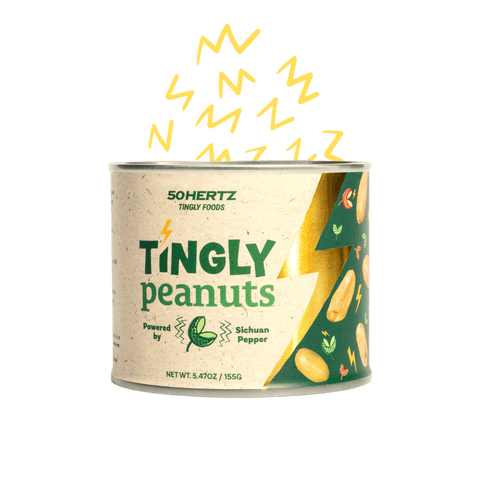
If you’re curious where to start, try dusting a little Sichuan pepper or Sichuan pepper oil over carne asada or al pastor tacos, sizzling fajitas, elote finished with lime and chile, carnitas tucked into warm tortillas, salsa macha or chile oil, roasted peanuts or pumpkin seeds, even dark chocolate, toffee brittle, or a buzzing churro rolled in sugar and spice.

Just a pinch is enough to change the entire experience.
Once you see it that way, the pairing stops feeling experimental.
It just feels inevitable.
Just a pinch is enough to change the entire experience.
Once you see it that way, the pairing stops feeling experimental.
It just feels inevitable.




Commentaires (0)
Il n'y a pas de commentaires pour cet article. Soyez le premier à laisser un message !