

The Specialty Food Association recently named SenseMaxxing its Trend of the Year, describing it as a shift toward foods that create bold sensory experiences. Their summary says it best:
"Goodbye boring beige. Hello full on feeling."
It is easy to see why.
We spend much of our lives staring at screens and scrolling through algorithms. Consumers are increasingly drawn to experiences that feel real, unique, and memorable.
They want foods that crunch louder, fizz harder, smell brighter, and create sensations that cannot be replicated digitally.
Think freeze dried candy that shatters between your teeth, mouth puckering sour candy, aggressively crunchy snacks, fizzy drinks like Olipop or Poppi, or perhaps the most unusual sensation of all: the electric tingle of Sichuan pepper.

Image: Freeze-dried candy has become one of the clearest examples of the sensory food trend. Products like Skittles Pop'd transform a familiar chewy candy into a light, crunchy experience.
In other words, people do not just want food that tastes good. They want food that does something and to feel it.
Why Sensory Foods Are Taking Off
Social media has accelerated the rise of sensory foods. Flavor is hard to show on a screen. Reactions are not.
That's why sensory-driven foods thrive online. Brands like Buldak, Tajín, chamoy candy, Dubai chocolate, and freeze-dried candy have all benefited from creating shareable sensory moments.
Consumers are increasingly seeking curiosity, surprise, and sensation. Research cited by the Specialty Food Association projects Gen Z's share of candy purchases will grow from 3.2% in 2025 to 17.2% by 2030, while 27% of consumers say they are interested in mystery flavors.

Taste Is Only Part of Eating
When most people think about flavor, they think about sweet, salty, sour, bitter, and umami.
But some of the most memorable food experiences have little to do with traditional taste at all. Scientists refer to many of these as trigeminal sensations: physical feelings detected by nerves in the mouth and face rather than taste buds.

Figure: Taste is only part of eating. Compounds such as menthol, capsaicin, carbonation, and sanshool from Sichuan pepper create physical sensations like cooling, burning, fizzing, and tingling that shape how we experience food. Source: See original article
These sensations help us perceive heat, cooling, tingling, irritation, dryness, and texture. Long before SenseMaxxing became a trend, people were seeking out foods that made them feel something.
Here are 10 of the best examples.
10 Foods That Change the Way Your Mouth Feels
Chili Peppers: The Burn

If there is a king of sensory foods, it is probably chili peppers. Most people are familiar with the burn of capsaicin, the compound that tricks heat receptors into believing your mouth is far hotter than it really is.
Mint: The Cooling Effect

Mint creates the opposite experience. Compounds like menthol activate cold-sensitive receptors, producing a cooling sensation even when nothing is actually cold.
Sichuan Pepper: The Tingle

Unlike chili peppers, Sichuan pepper is not primarily about heat. Instead, it creates a buzzing, tingling sensation often described as electric, sparkling, or lightly vibrating.
The effect comes from naturally occurring compounds called sanshools, which interact with touch-sensitive nerves in the mouth. Researchers studying the phenomenon have even compared the sensation to vibrations around 50 hertz.
Few ingredients create a sensory experience quite like it.
Wasabi: The Nose Rush

Wasabi gets its signature punch from a compound called allyl isothiocyanate. Unlike capsaicin, which lingers on the tongue, this compound travels through the nasal passages, creating that sudden sinus-clearing rush sushi lovers know well.
Carbonation: The Sparkle

Sparkling water is not just bubbly. Carbon dioxide creates a slight chemical sting that contributes to the crisp, refreshing sensation we associate with soda, beer, champagne, and sparkling water.
Ginger: The Warm Glow

Fresh ginger contains compounds called gingerols that create a gentle warming sensation. It is not exactly spicy and not exactly hot, occupying a category all its own.
Pineapple: The Tiny Sting

Ever notice your tongue feeling slightly irritated after eating a lot of pineapple? That is because pineapple contains bromelain, an enzyme that breaks down proteins, creating a subtle but unmistakable sensation.
Persimmons: The Dry Mouth Effect

An unripe persimmon can make your mouth feel strangely dry and fuzzy. That sensation comes from tannins binding to proteins in saliva, creating what scientists call astringency.
Okra: The Slip

Love it or hate it, okra has one of the most distinctive textures in food. Its natural mucilage creates a silky, slippery mouthfeel unlike almost anything else.
Miracle Fruit: The Flavor Transformer

Miracle fruit contains a protein called miraculin that temporarily changes how your taste receptors perceive acidity. For a short time, lemons can taste sweet and sour foods become surprisingly pleasant.
Why SenseMaxxing Matters
The real story behind SenseMaxxing is not candy, carbonation, chili peppers, or even Sichuan pepper.
It is that consumers increasingly want foods that create memorable experiences. A flavor can be forgotten. A sensation is harder to ignore.
That helps explain why freeze-dried candy has exploded, why sour candy remains popular, and why spicy challenges continue to generate millions of views. Consumers are looking for foods that surprise them.
Sometimes that comes from a fiery chili. Sometimes it comes from a mouth-puckering candy. And sometimes it comes from Sichuan pepper that makes your lips buzz.

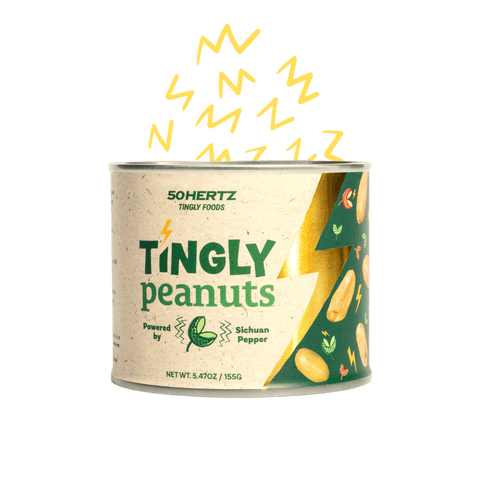
At 50Hertz, we have spent years introducing people to that sensation through products like our Tingly Peanuts, Tingly Cashews, Tingly Salt, and Tingly Chocolates. We did not know there would eventually be a name for the trend, but we certainly recognize the feeling.
If SenseMaxxing is about creating memorable sensory experiences, few ingredients embody it better than Sichuan pepper.




Commentaires (0)
Il n'y a pas de commentaires pour cet article. Soyez le premier à laisser un message !