

Mahjong has always evolved.
The game spread through migration, trade routes, diaspora communities, and regional reinterpretation across Asia and eventually the rest of the world.
Over time, countless versions emerged: Cantonese mahjong, Taiwanese 16-tile mahjong, fast-paced Sichuan mahjong, Japanese riichi mahjong, Vietnamese and Singaporean variants with specialty tiles, and American mahjong with its yearly hand charts and joker-heavy play.
But even when mahjong changes aesthetically across generations and countries, the structure of the game still carries deeply Chinese cultural ideas within it.
That’s part of why conversations around mahjong can become surprisingly emotional.
For some people, mahjong is just a game.
For others, it’s family memory, diaspora identity, social ritual, nostalgia, superstition, and cultural inheritance all happening at once.
Mahjong’s Chinese Roots

Mahjong’s roots are undeniably Chinese.
Most historians trace the game back to Qing dynasty China, with many early versions associated with the Shanghai region before it spread outward through migration and trade.
Over time, regional variants evolved across Asia and beyond, but many of the game’s deeper structural ideas remained recognizable even as rules changed.
That’s partly why mahjong still feels culturally Chinese even when the tiles themselves look completely different.
Mahjong’s roots are undeniably Chinese.
So What Actually Is Mahjong?

Image: It may look intimidating at first — all the Chinese characters, symbols, and tiles — but once you learn the suits, patterns, and rhythms of the game, mahjong becomes surprisingly intuitive.
At its core, mahjong is a four-player strategy game built around drawing and discarding tiles to complete winning hands.
But in practice, mahjong is also bluffing, pattern recognition, probability, superstition, snacks, shit talking, and table politics all happening at once.
Depending on the ruleset, players build hands using sequences, triplets, pairs, and special combinations while constantly paying attention to discards and tracking what other players might be waiting for.
The game moves surprisingly fast once everybody at the table knows what they’re doing.
Part card game, part ritual, part psychological warfare.
The Structure Still Carries Chinese Culture

Image: The custom mahjong set from Everything Everywhere All at Once replaces traditional Chinese imagery with hotdog fingers, tax forms, and absurdist symbols — while still preserving mahjong’s core Chinese structure.
Even when reinterpretations replace traditional Chinese imagery with minimalist icons, pastel aesthetics, or absurdist symbolism, the structure of mahjong still carries deeply Chinese cultural ideas within it.
The directional winds draw from traditional Chinese cosmology and feng shui, where orientation and balance shape how people understand space and movement.
The ritualized seating order reflects longstanding ideas around hierarchy, social roles, and relational harmony at the table.
Even the game’s symmetry feels culturally rooted. Tiles are grouped into ordered suits, repeated patterns, and balanced formations that reward harmony and structure over randomness alone.
The act of building walls before each round also transforms setup into ritual. Every player physically participates in constructing the game space together before play begins.
That’s part of why mahjong still feels culturally recognizable even when the artwork changes completely.
Beneath the surface aesthetics, the game still operates through deeper ideas tied to balance, ritual, order, flow, and collective participation.
Riichi, Diaspora, and American Mahj
 Image: Women gathered for mah jongg in New York’s Catskills during the 1950s — part of the game’s deep roots in Jewish-American social culture. Photo via Kveller.
Part of what makes mahjong’s current moment so interesting is that multiple cultural histories are colliding around the same table.
Riichi mahjong became deeply associated with Japanese gaming culture and eventually spread internationally through anime, online play, and competitive communities.
Meanwhile, mahjong’s American history evolved very differently.
Throughout the twentieth century, mahjong became deeply woven into Jewish-American social culture, particularly among suburban women who transformed the game into both competition and social ritual.
American mahjong eventually developed its own distinct ecosystem of yearly hand cards, tournaments, etiquette traditions, colorful accessories, and intergenerational social circles.
That’s part of why today’s resurgence feels so layered.
Different communities are rediscovering mahjong through completely different pathways: family tradition, Chinatown community spaces, competitive riichi circles, suburban hosting culture, diaspora nostalgia, and modern “Mahj” lifestyle branding all at once.
And despite how different those worlds can look aesthetically, they’re all still orbiting around the same centuries-old game.
The “Mahj” Controversies
Mahjong’s recent boom has also reopened larger conversations around commercialization, aesthetics, and cultural ownership.
Much of the criticism centers around luxury American mahjong brands that heavily market designer sets, “tablescapes,” hosting culture, and aesthetic game nights while minimizing or flattening the game’s Chinese origins.
Today, mahjong is increasingly being transformed into a luxury lifestyle object.
There are now $400 designer tile sets, branded cocktail napkins, curated “Mahj” hosting kits, and even ultra-luxury fashion house mahjong sets selling for astonishing prices.
 Image: Hermès released a mahjong set reportedly priced around $51,000.
The game has increasingly become absorbed into the language of luxury branding, collectible design objects, and aspirational hosting culture.
And for some players, that transformation feels strange.
Because mahjong was historically played everywhere from working-class apartments and Chinatown community spaces to family kitchens, gambling parlors, and Catskills resorts — not just luxury penthouses and curated Instagram tablescapes.

Image: Brunello Cucinelli’s walnut wood, brass, and leather mahjong set — one example of how luxury fashion houses have increasingly transformed mahjong into a high-end lifestyle object. Retail price: over $10,000.
In 2021, The Mahjong Line faced major backlash after describing its redesigned sets as a “respectful refresh” for “the stylish masses.” Critics accused the company of erasing Chinese culture while profiting from a deeply Chinese game.
 Image: The Mahjong Line’s $485 “Americana Line” replaces traditional Chinese characters and symbolism with highly Americanized imagery and English lettering — one example frequently cited in debates around commercialization, cultural erasure, and the aesthetic rebranding of mahjong for modern American lifestyle audiences.
Other controversies have focused on the removal of Chinese characters from tiles, the replacement of traditional imagery with pastel aesthetics and simplified icons, and marketing language implying the original game needed modernization to become “beautiful” or accessible.
At the same time, many Asian-American players and organizers argue that the issue is not that new people are discovering mahjong.
The issue is whether engagement stops at surface aesthetics without curiosity about the culture, history, language, and communities surrounding the game itself.
 Image: A more traditional Chinese mahjong set with classic Chinese characters and tile iconography — visually contrasting the minimalist and heavily redesigned aesthetics of many newer luxury “Mahj” sets.
A Complicated Cultural Conversation
At the same time, the conversation itself is nuanced.
Mahjong has always evolved through cultural exchange. American mahjong itself carries deep meaning for many Jewish-American communities who helped popularize and sustain the game throughout the twentieth century.
Yao Zhao, founder of 50Hertz Tingly Foods, approaches the conversation with nuance shaped partly by his upbringing in Chongqing:
“Personally, I don’t get too hung up on ‘purity.’ Culture travels, evolves, and gets reinterpreted — sometimes badly, sometimes beautifully. What matters to me is whether it’s done with respect rather than just aesthetics.”
That distinction matters.
Culture does not stay frozen.
But acknowledgment still matters too.
You Still Can’t Remove the Chinese DNA Out of Mahjong
 Image: You can redesign the tiles, rebrand the game, or reinterpret the aesthetics — but traces of mahjong’s Chinese roots still remain embedded around the table through the winds, rituals, language, symbolism, and structure of the game itself.
Even as mahjong continues evolving across countries, generations, and internet subcultures, traces of its Chinese roots remain embedded in the structure of the game itself.
In the winds. In the rituals. In the language carried across the tiles. In the act of building walls together before every round begins.
You can redesign the tiles. Rebrand it as “Mahj.” Turn it into a luxury lifestyle aesthetic.
But underneath all of that, the game still carries centuries of Chinese cultural memory, symbolism, and social ritual inside it.
And maybe that continuity — the fact that the game still carries pieces of where it came from no matter how much it evolves — is part of why mahjong continues resonating so deeply across generations and cultures today.
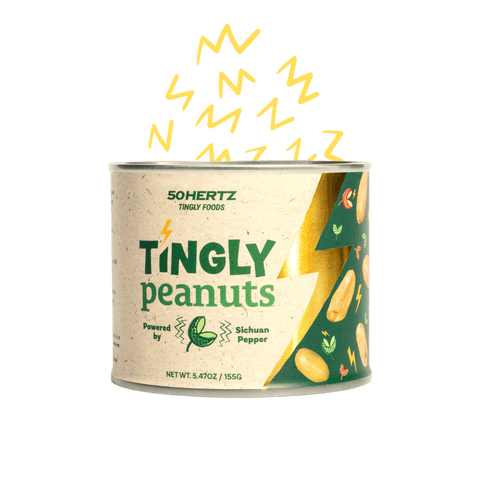
At 50Hertz Tingly Foods, we think about cultural continuity in similar ways too. Sichuan pepper, málà flavors, long table gatherings, late-night conversations around shared food — these traditions continue evolving across generations and diasporas while still carrying deep connections to where they came from.
Maybe that’s part of why mahjong feels culturally familiar to us in the first place.




Comments (0)
There are no comments for this article. Be the first one to leave a message!