

You’ve probably tasted Sichuan pepper (also known as Szechuan peppercorn) in a simmering plate of mapo tofu or a numbing-hot noodle dish at your favorite Chinese restaurant.
Floral, citrusy, and famously tingly, Sichuan pepper does something few other spices can: it creates a buzzing, numbing sensation in your mouth.
That numbing buzz brings new life to tofu, tempeh, vegetables, mushrooms, beans, noodles, rice, and nuts, making it a natural fit for plant-based cooking.
Its appeal reaches far beyond traditional Sichuan cuisine, turning up in a surprisingly diverse range of foods, snacks, and even drinks.
Examples include Goodnow Farms’ vegan Herbaceous Green Sichuan Pepper dark chocolate and San Juan Island Sea Salt’s vegan Tingly Blend.
That same versatility extends to restaurant menus around the world. In Hanoi, Workshop 14 — named one of Asia’s 50 Best Bars — brings Sichuan pepper into cocktails, while three-Michelin-starred Eleven Madison Park has featured Sichuan pepper in fine dining. In Tokyo, it even finds its way into Vegan Veggie Joga’s vibrant Green Mapo Tofu.

Image: Goodnow Farms’ vegan Herbaceous Green Sichuan Pepper dark chocolate pairs 50Hertz green Sichuan pepper with single-origin Peruvian dark chocolate, bringing its piney, floral, citrusy notes — and signature tingle — into an unexpected plant-based treat.

Image: San Juan Island Sea Salt’s vegan Tingly Blend combines 50Hertz red and green Sichuan pepper with sea salt, garlic, citrus, mushrooms, and spices for an easy way to add a floral, numbing buzz to vegetables, noodles, popcorn, and more.
 Image: HI MA GIN at Workshop14 in Hanoi shows Sichuan pepper’s versatility beyond the kitchen, pairing green Sichuan pepper with floral gin and vermouth for a bright, aromatic cocktail.
 Image: Vegan Veggie Joga’s Green Mapo Tofu in Tokyo — a vibrant vegan take on the Sichuan classic. Bonus: it’s right next to Gold’s Gym Minami-Aoyama, making it a great post-workout bite.
An Ancient Spice With New Appeal

Sichuan pepper may feel newly discovered in Western cooking, but its roots stretch back thousands of years.
As Fuchsia Dunlop notes in Shark’s Fin and Sichuan Pepper, it appears as early as the Book of Songs, China’s oldest poetry collection, where it symbolized fertility and love. During the Han dynasty, Sichuan pepper was even mixed into palace walls in hopes of producing heirs.
Neither chili nor black pepper, Sichuan pepper comes from the prickly ash tree, a citrus relative used in Chinese cooking for millennia.
Red Sichuan pepper is warm and woodsy, central to Sichuan cuisine’s málà flavor. Green is brighter and more citrusy, and has surged in popularity among a new generation of Chongqing chefs who use it in cold dishes, noodles, and dipping oils.
Both deliver the signature numbing tingle, with red bringing depth and green a fresh, almost electric lift.
Want to go deeper? The New York Times offers a fascinating deep dive into Sichuan pepper — from its ancient history and distinctive science to its former U.S. import ban and growing popularity in Western cooking.
The Science Behind the Tingle

So what actually makes Sichuan pepper tingle?
Unlike chili heat, which comes from capsaicin, Sichuan pepper’s buzz comes from compounds called sanshools, which stimulate touch-sensitive nerves in the mouth and create a sensation closer to vibration than burning.
Researchers at University College London measured that perceived vibration at around 50 hertz — the inspiration behind the name 50Hertz Tingly Foods.
The tingle also stimulates salivation, which can make food feel juicier and flavors more vivid.
The sensation can be startling if you’ve never experienced it — one memorable description compares it to being kissed by “a horde of tiny bees.”
But that buzzing, tingling, and temporary numbness is the expected effect of Sichuan pepper, not in itself a sign that something is wrong.
Why It Works So Well in Vegan Cooking
Great vegan cooking builds layers: mushrooms and fermented foods bring umami, nuts and oils richness, citrus and vinegar acidity, and chilies heat.
Sichuan pepper brings something different: floral, citrusy flavor and a physical sensation.
Its signature tingle cuts through creamy tofu and avocado, brightens earthy mushrooms and grains, balances sweet squash and potatoes, and adds buzz alongside chili heat.

Image: Even simple plant-based foods can get the Sichuan pepper treatment. A drizzle of 50Hertz Red Sichuan Pepper Oil gives fries a floral, citrusy kick and signature tingle.
As Yao Zhao, founder of 50Hertz Tingly Foods, puts it:
“You don’t need meat or heat to feel something. Vegan food deserves to be thrilling.”
Sichuan pepper doesn’t make plant-based ingredients taste like something else. It simply makes what’s already there more exciting.
And the best way to understand it is to cook with it.
7 Vegan Recipes to Try With Sichuan Pepper
(courtesy of 50Hertz Tingly Foods)
We went through our recipe collection to find seven dishes especially suited to plant-based cooking.
Some are already vegan; for others, we’ve swapped or omitted a few ingredients to make them vegan here.
1. Hot-Tingly-Sour Silken Tofu

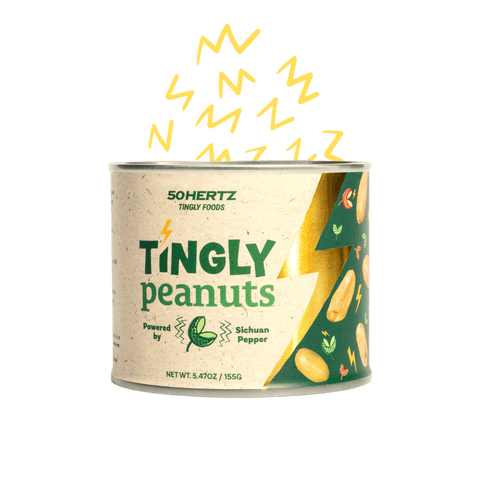
A quick, protein-packed favorite. Silken tofu meets avocado, pickled vegetables, scallions, vinegar, soy sauce, chili oil, and a handful of tingly peanuts.
Our vegan version: Use vegan kimchi and chili oil.
Why it works: Sichuan pepper oil adds electric contrast to the creamy tofu and avocado.
Get the Recipe: Hot-Tingly-Sour Silken Tofu
2. Tingly Sichuan Pepper Edamame

Pan-charred edamame tossed in Sichuan pepper oil, crushed pepper, garlic powder, and salt.
The pods blister just enough to pick up smoky flavor while the numbing-citrus oil clings to the skin.
Why it works: The soybeans’ natural umami and smoky char pair beautifully with Sichuan pepper’s bright, tingling buzz.
Get the recipe: Tingly Sichuan Pepper Edamame Snack
3. 50Hertz Fried Rice

Garlic, ginger, onion, and scallions bloom in oil with crushed Sichuan pepper, then are tossed with celery, peas, corn, and leftover rice and finished with green Sichuan pepper oil.
Our vegan version: Use vegan chili crisp and omit the egg or substitute your favorite plant-based protein.
Why it works: Green Sichuan pepper keeps this savory comfort classic bright and fragrant.
Get the Recipe: 50Hertz Fried Rice
4. Sweet and Sticky Tingly Potato Bites

Baby potatoes are glazed with soy sauce, Korean rice syrup, and garlic, then finished with green Sichuan pepper oil.
Why it works: The floral tingle cuts through the sweetness, adding brightness and contrast.
Get the Recipe: Sweet and Sticky Tingly Potato Bites
5. Tingly Hot Garlic Peanut Dipping Sauce

Peanut butter meets Sriracha, sesame oil, and Sichuan pepper oil in a creamy sauce topped with crushed tingly peanuts.
Our vegan version: Choose maple syrup instead of honey.
Why it works: Sichuan pepper’s numbing sparkle cuts through the richness of the peanut butter. Perfect with crudités, spring rolls, or drizzled over bowls.
Get the Recipe: Tingly Hot Garlic Peanut Dipping Sauce
6. Arrabbiata Sauce With a Tingly Twist

Tomatoes, olive oil, red pepper flakes, garlic, and red Sichuan pepper oil create a layered, spicy-tingly pasta sauce.
Our vegan version: Skip the Pecorino or use vegan Parmesan.
Why it works: Chili brings the heat; Sichuan pepper brings the tingle, adding another layer of sensation.
Get the Recipe: Arrabbiata sauce with a tingly twist
7. Tomato Carpaccio Salad With Crispy Tingly Peanut
Crunch
 Heirloom tomatoes and plums are layered with peppers and flaky salt, then topped with a crispy mix of panko, peanuts, and Sichuan pepper.
Make it vegan: Swap the anchovies for capers, white miso, and nori, and use vegan mayo in the dressing.
Why it works: Sweet tomatoes and plums meet tangy dressing, savory crunch, and Sichuan pepper’s signature tingle.
Get the Recipe: Tomato carpaccio salad, with crispy tingly peanut crunch
A Little Tingle Goes a Long Way
The best plant-based cooking doesn’t just deliver flavor — it plays with texture, aroma, contrast, and sensation. Sichuan pepper brings all four.
Its floral, citrusy character can brighten the simplest ingredients, while its unmistakable tingle turns eating into an experience. Tofu, mushrooms, vegetables, grains, and nuts don’t need to imitate anything else to be exciting.
Sometimes, all they need is a little buzz.




Comments (0)
There are no comments for this article. Be the first one to leave a message!